Monday, August 30, 2010

My Apologies For My Blogging Slackness

I just wanted to apologise for my blogging slackness. I've been very busy with work and I've started some post-grad study at uni in politics and government. I can say that my blogging on spirituality in the public sphere, with an emphasis on the political realm, has lead me down this path. Maybe one day, I'll actually know what I'm talking about. Oh, and I also lost my ipod, which was a major source of podcast information and inspiration...

Oh, and I have a wife and kids... They are quite time consuming as well... but also quite nice really...

The really sad thing is that there has been quite a lot going on that I would have liked to babble on about. I would like to have shared a few more thoughts on different people's reactions to Julia Gillard being an atheist. I got some great emails sent to me by different people claiming that she was the anti-Christ etc etc, and then she went and trumped God's own party (the coalition in case you were wondering) by pledging $65 million more than them for the contunuation of chaplaincy over the next three years. I don't know why, but I just thought that was really funny...

Then there was the "ban the burka" debate... now this is fascinating. Bans are already in place in European countries like France and Belgium, and the discussions have already started here. Amazing stuff - what does it mean to be a free society? Should Muslim women be free to wear the burka or should they be freed from wearing it? Anyway, I just haven't had the time to go into it... but I'm sure it's not the last we've heard of it.

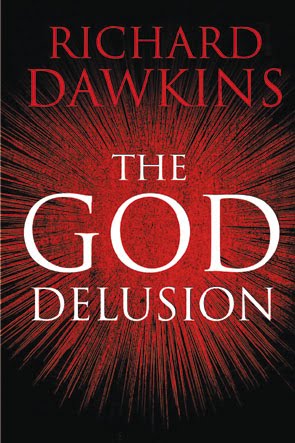
Also, I finally finished the "His Dark Materials" trilogy after about a year of reading. Those three books together were about a metre thick. You might have heard of the movie, "The Golden Compass". Well it was that set of books - the "anti-Narnia", a supposed atheistic fantasy novel. That stuff was there, and it was also a ripping good read! I'm back into "Doubts and Loves " by Richard Holloway, but can't seem to get motivated to keep going with "God Delusion".

And then on the weekend, in The Australian Magazine I think, there was an article about guilt and how in some ways modern society has done away with it, along with religion, but in another sense it has just transferred it to a different set of "deadly sins" (one of which was to have religious belief)... There was some interesting discussion about whether the loss of guilt in our modern world had been a good thing or a bad thing. Interesting stuff going on out there...

Anyway, I saw the light on and thought I'd drop in... just touching base, checking in etc etc... I'm not sure when I'll get onto this beast again but I hope it's soon. There are heaps of interesting things going on out there that are greenspace blog-worthy. If I don't get to them and start talking about them, make sure you do...

Shalom

Steve

Monday, July 5, 2010

Campaigning to Christians

Here is one of them articles I was talking about in my previous post... It is called "Campaigning to Christians", written by Professor John Warhurst, an Adjunct Professor of Political Science at the Australian National University and Flinders University.

I hope you find it interesting reading... Shalom...

Steve

Gillard Won't Play the Religion Card

It has been a fascinating last few weeks in politics. The events around Kevin Rudd’s demise and Julia Gillard’s ascendancy to the role of Prime Minister have dominated the news cycle. Some of the articles in the news have focused on some of Julia Gillard’s unique characteristics as a Prime Minister: that she is a woman, that she is unmarried, living in a de-facto relationship; that she doesn’t have children; and that she is an atheist. 

Last week, there was an interesting ABC Online article called “I Won’t Play the Religion Card”. In the article, Gillard shared that she is an atheist and that she won’t be pressured into pretending that she is a person of faith for political benefit. 

I find it so interesting, but not surprising, that she has to make a statement like that. There is this often talked about perception in Australian politics that it is advantageous to be affiliated with some kind of  branch of the Christian faith, even when Australians are less and less affiliating themselves personally with it. Kevin Rudd knew it and was was more than happy to have a weekly press conference out in front of the local church he attended (with the church shown prominently in the background). And John Howard new it too and closely linked a number of his policy decisions and directions with his Methodist roots.

(Another article from the previous week worth looking at is one from the Courier Mail, entitled, "Julia Gillard Offers Rule Without Religion")... The theme of religion and politics in Australia is always bubbling along just below the surface, regardless of who is in charge. I wrote in an earlier post that I thought it would be interesting with Rudd and Abbott going head-to-head at the next election, but what will it mean now?

It certainly won't be last time we hear of this, in fact, what I think will happen, is that something that has been puttering along in the background of Australian politics is going to come more to the forefront. Australian Christian lobby and interest groups are going to have to re-adjust to new religious/political landscape after 14 or 15 years with a religious person in charge of the country.

I'm guessing that Julia Gillard won't have the same connection and empathy with certain religious agendas and religious groups might find themselves looking for new ways to get the government's ear...

'Twil be very interesting... Watch this space - I'll try to keep up...

Shalom...

Steve

Thursday, June 17, 2010

Everything's Amazing and Nobody's Happy

A friend of mine sent this to me today and I thought it was pretty funny...

Monday, May 24, 2010

Morality in the 21st Century

One of the podcasts I listen to and admire a lot is “Philosophy Bites”. David Edmunds and Nigel Warburton interview philosophers on various topics and put together very interesting 15 minute segments. In this episode entitled “Morality in the 21st Century”, Susan Neiman, the head of the Einstein Forum in Berlin, talks about the progress humanity has made in relation to morality and the Enlightenment as a good source for a moral code for our time.

Neiman suggests that the Enlightenment is often misunderstood and caricatured in ways that aren’t helpful. Contrary to these views, she proposes that the Enlightenment was essentially about 4 things:

(1) Happiness: Neiman is not talking about that warm, fuzzy feeling we get inside here, but happiness in terms of personal and societal wellbeing. She thinks that the Enlightenment thinkers believed that people should be free from worry about their basic survival, and free to pursue a life with meaning and purpose.

(2) Reason: Neiman says that this has been an absurdly caricatured aspect of the Enlightenment and criticises the “new atheists” for getting on board with this. Reason is not the polar opposite of faith. The Enlightenment thinkers were not coldly rational and saw the very clear limits of reason. They still strongly emphasised passion, intuition, and the transcendent.

(3) Reverence: This is the big surprise for many people. The Enlightenment thinkers were not against spirituality, but they were opposed to organised religion and the way it had been used to oppress and control people. There was recognition that the Judeo-Christian religious traditions and positions were strongly reasoned ones. The scientific methods grew out of a desire to know the Creator better through understanding creation better. Neiman suggested that the core of this element was essentially a sense of gratitude about the world and an appreciation that we didn’t make it. A notion that could unite secular and religious people.

(4) Hope: This is very different from optimism. Neiman says that the Enlightenment didn’t necessarily see humanity is good, marching forward to this positive future based on their goodness. There was a lot of attention given to the problem of evil in the lives of people and in the world. However, they did believe that these ideals they were thinking through could actually improve the world and make it a better place should people commit them and act upon them.

It’s very interesting stuff and there is a lot more than what I have previewed here. It’s less than 15 minutes long, so it won’t take long to have a listen and to see what you think...

Shalom...

Monday, May 17, 2010

Out of the Mouths of Babes

My son Lewis is 4 years old and conversations with him can begin and end anywhere. This morning, our conversation began with, “Dad, do you still have that sore in your bottom?” I couldn’t work out what he was talking about and then he reminded me that I had had a sore in my bottom a few weeks ago. This is where the conversation went from there...

With a smile, I said, “The sore is gone now buddy. It got better.”

“Why?”

Why did it get better?”

“Yes.”

“Well, your body is designed in such a way that when you get a sore, it gets better over time and it goes away.”

Long pause.... “Dad..... Why did God make things so hard?”

Slightly taken aback, I asked, “What do you mean, why did God make it so we get sores and things like that?”

A little nod...

At this point, I’m moved, amazed and impressed by my little man and his big question – probably the biggest question that a person can ask at almost any point in their life (although it seemed a little out of place coming from a 4 year old) - “Why did God make things so hard?” So, we talked about this for a short while. I told him that God had made things good and that when people decided not to do things God’s way, it wrecked a whole lot of stuff for everyone and made things hard. I went on to say that God wanted to try to get back all the good stuff for people. He wanted people to live God’s good way.

Lewis then said, “God doesn’t want people to go to jail does he?” (I love the leaps)

I smiled and said, “No, God doesn’t want people to go to jail. He wants good things for them”

“What if they keep doing bad things? Will he put them in jail?”

“Well God wants good things for people. He is very patient and kind and he wants to give them lots of chances to be good and enjoy his good things.”

Another pause... “I think I’m going to talk to God now.”

“Okay...” (trying to keep up with whatever is happening)

Lewis, walking around the lounge room prays, “God, can you fix everything and make it good? Can make things right?”

“Amen.” I said.

Lewis then looked at me and said, “I’m not going to pray to God anymore.” To which I replied, “Well, I think God is going to miss you talking to him. I’m you daddy and I love talking to you, and God is like your daddy in heaven and he loves talking with you too.”

Another pause, then, “Well, I’ll talk to him and I’ll just tell him that I love him.”

Tears in my eyes... “I think he’ll like that buddy.”

A morning to treasure...

Shalom...

Heaven Can't Wait

There is a lot being written about spirituality and religion at the moment – even if most of it is negative or dismissive. This weekend, the Weekend Australian Magazine published an article called “Heaven Can Wait” by Johann Hari. With the tag line, “It’s time to get over the myth of the hereafter” (or something like that) it’s not too difficult to work out the direction the article takes.

It’s a mixed article. It suffers from the foibles of a lot of atheistic writing – it has a lot of “straw man” set ups; weak arguments with large holes; a convenient and creative historical account of the development of ideas; language designed to make anyone who is even considering there might be an afterlife feel like a mindless zombie; and most of all, it suffers from that classic rationalistic, atheistic assumption that anything you can’t see, tag and classify, isn’t worth considering and reflecting on... The good thing about the article however, is that it provides us with a challenge to reflect upon our beliefs about heaven and how these beliefs impact upon our lived out lives.

When most people think about heaven, they think about a future, disembodied, other worldly existence in the presence of God and all the other “saints” that goes on forever (and many also see clouds, wings and harps somewhere in the picture). But the interesting thing is, when we look at what the Bible says when it talks about the “age to come”, it talks about God coming and making his dwelling place on earth among his people (Revelation 21: 1-7). It seems that heaven might not be the end of the world after all, and that God is committed to renewing this world and this life, and making sure that all that has been lost to God and the cosmos through sin is won back once and for all. This view of heaven is amazingly affirming of this world and this life, and we see the first evidence of this in the very physical resurrection of Jesus, celebrated at Easter.

The other thing that is worth noting is the way Jesus talked about heaven. He spoke a lot about the “Kingdom of Heaven” and said things like “it is near” and that “it is among us”. He taught about this, told heaps of stories about this and lived out the vision of this in the community of people he set up around him. This is where Hari’s main argument really falls down. “Heaven can’t wait”!!! When heaven is seen as a future, disembodied, other worldly experience, then there is a real danger that the concept can at best, be of no use to us, and at worst cause harm to us and others. But when we conceptualise heaven as Jesus did, as a future hope that can be lived out in the present, then it becomes a potentially transformative vision worth living out – especially one that can be “good news to the poor” (because the last will be first “in heaven”)...

When Jesus taught us to pray, he put it to God, “Your Kingdom come, your will be done, on earth like it is in heaven.” Jesus was committed to and working toward God’s vision of Shalom – God’s cosmic groovy-ness where everything is at is should be - and that is a vision just might be worth living for in this life, and carrying forward into the next.

Shalom...

Thursday, May 13, 2010

Federal Budget 2010 - How will the world's poor fare?

TEAR Australia's "ChangeMakers" advocacy group, have released an article entitled "Federal Budget 2010 - How will the world's poor fare?". It talks a bit about the budget in general, about Australia's overseas aid commitments, and makes some suggestions about some political action we could take to help the world's poor through political action.


As a Christian person, I think my decision on who I vote for in the next election should be heavily influenced by how the party approaches its commitments to the world's poorest people.

Anyway, take a look and see what you think... if you dare...

Shalom...

Resurrection

I know Easter was a few weeks ago now, and that I'm a little behind the times, but I have just caught up with some podcasts as I have been driving around in my car and riding on the train. The resurrection is the cornerstone event for the Christian faith and its important to consider it and to think through what it means for our lives. If we don't understand the resurrection and what it means, then we can't really understand the Christian faith.

This post is simply a "heads up" for an excellent podcast on the resurrection. It is a sermon by Rob Bell of the Mars Hill church - the one he did for his church on Resurrection Sunday. It really inspired me to value the importance of the resurrection and it reminded me that at the heart of the meaning of the resurrection, is that God values this world and this life, and that it is an event for hope in the here-and-now as well as for hope in the future. Rob provides a number of very useful analogies that helped me to understand some of the implications of the resurrection for our lives.

Have a listen and see what you think...

Shalom... 

Thursday, April 22, 2010

"One Shot Mega-Luck"...?

A few years ago, I asked for the book "The God Delusion" for Christmas. This is a book about atheism by the world's most famous atheist, Richard Dawkins. For the last few years, I've been looking into atheism. I've been reading books and articles, and listening to podcasts etc, trying to get a handle on it. I'm quite a critical thinker, and I don't like the idea that I've fallen into Christianity just because it's the religion of my childhood. At the same time, I wouldn't want to reject it for that reason either... I have been genuinely interested in what atheists have to say and I like to make sure that I haven't just been kidding myself that Christianity is a viable worldview option to own for my life.

I have to say that I've been a little disappointed with what I've found on offer by the "new atheists", and I'm quite fascinated by my level of disappointment. Megan, my life (typo - I meant my wife), laughs at me when I tell her how disappointed I am that the atheist's arguments haven't been able to sway me. I think she thinks there's something strange about that - not that the arguments haven't swayed me, but that I was so disappointed that they hadn't. My disappointment comes from three main things...

The first disappointment is that the level of argument against God hasn't been very sophisticated. I was genuinely hoping for more and hoping to be deeply challenged by the latest, cutting edge thinking in atheism - and it just wasn't there. Some of the arguments could have been refuted by Sunday School kids and others just demonstrated a complete lack of understanding of the nature of religion and spirituality in any form or expression across most of the world. I thought it might be just me, but then I heard two different people on two separate occasions on podcasts say that the arguments of the "new atheists" weren't as good as some of the great atheists of the past (and one of the people who said this was an atheist himself!)...

The second disappointment is the continual use of "straw man" arguments. "Straw man" arguments are when someone who disagrees with a point of view, weakly and erroneously builds up a picture of that point of view (the straw man), and then sets out to tear down the point of view bit by bit with apparent ease. Some of these guys are talking about strokes, hallucinations and being swept away by mega-church experiences as religion and then coming across like they've said and done something significant when they've talked down these things. It would be like bringing up the recent "Climategate" email scandal or CSIRO research scandal and then claiming that you've brought the field of science to its knees. It's kind of sad and funny at the same time...

But the third and biggest disappointment is the lack of an answer as to our origins or anything's origins for that matter. I was thinking that surely there would be some new insight into this or some new scientific discovery about this to back up this new zeal and fervor of the new atheists. I can appreciate a lot of the talk from atheists about how amazing evolutionary processes might be, but I've never heard any good response to the question of how the process began - which to my mind, undermines the whole credibility of the process as a useful theory. This seems like a pretty important piece of information to have a grasp of if you are going to be confident in your a-theism. But I was listening to Richard Dawkins talk at the Global Atheists Convention last month about evolution, and in this particular podcast his description of the origins of the universe and then of life was that there had been a does of "one shot mega luck"...

What? What did you say? One shot mega luck? - that's what you've replaced the notion of God with... You, what?... One shot mega luck? You must be kidding... This is what the world's most prominent atheist travels the world armed with as he confidently dismisses the existence of God. Sorry Richard, I was looking for more from you and the crew. I'm feeling a little more confident about where I'm at... but ever watchful. Truth can turn up in the most surprising of places.

Shalom...
 
You will need to update the "xxxx-x" in the sample above with your own Google Analytics account number. Note that the following line of code must be placed on the page before any reference to the pageTracker object. var pageTracker = _gat._getTracker("xxxx-x");