Showing posts with label doubt. Show all posts

Sunday, September 11, 2011

10 Years On...

Yes, its ten years on (not since my last blog post, but close...)... Ten years on since the world changed in profound ways as the result of the terror attacks on the Word Trade Centre and the Pentagon in the US. It's hard to remember life before the very bizarre "the war on terror" that followed and remains with us to this day.

One of the things that has changed, of course, is the perception of Muslim people in our world. 

Research has shown that there has been a dramatic rise in the levels of demonisation that Muslim people have experienced across the globe since the 2001 attacks. There seems to be a new xenophobia in town, or at least new expressions of old xenophobia that has been lurking not too far from the surface of our communal life. This developing mindset has coloured our own our nation's views on worthwhile pursuits like multiculturalism and the processing on asylum-seekers.

Personally, I don't know that many people who identify as "Muslim". I could count them on one hand. But when you know someone, it certainly cuts through all the xenophobia that swirls around you... When I was a school chaplain, one of the teachers at my school was a devout Muslim - a lovely, lovely man. One day, I was preparing to do some religious teaching in a class that this teacher was presiding over and he asked me if he could say something before I began. I wasn't too sure if I should let him (him being "Muslim" and all) but it was his class, what was I going to do? Besides, he was such a great guy... So, he spoke to the class for two or three minutes about the importance of God, and that even if God wasn't high on their agenda at the moment, if they listened, maybe later on in their lives their agenda might change and something they heard today might come back to them and be useful. He then handed back to me... but I was at a loss for words... I felt as thought the religion lesson had been well taught - well, it had been to me at least... 

I was so impressed with his words and his inclusion of me in his spiritual world. He had been far more gracious towards me than I would have been towards him. Something quite profound changed in me as a result of that exchange... It helped me to see that while we can spend a lot of time trying to work out who is "us" and who is "them, that mostly, I think, in a lot of ways, it is just all "us" out there, trying to work it all out and make the most out of our lives.

My encouragement on this suspicious anniversary is to go and hug a "them" today... Well, at least say "hi"... particularly if you are planning on hugging them next... Anyway, I'm sure you'll work it out...

Shalom

Steve

Friday, May 20, 2011

It's the End of the World As We Know It...

You might have heard that the end of the world  has been predicted for tomorrow... Harold Camping, a Christian radio broadcaster from  America, has made the call, after making a calculation of some kind  based on Biblical data. Unfortunately, in a pretty big hit to his credibility, he has been here before, predicting that the world would end in 1994...

...but it didn't, in case you were wondering why you are still here.

For some more info on this, you can watch a news video on the The Australian website by clicking here and/or go directly to the Family Radio website and read all about it (from the horse's mouth, so to speak) by clicking here... 

People are having a lot of fun with this, and it is hard to blame them. Having said that, this latest prediction provides an opportunity to ask the more serious question, "Where is it all actually heading?" The Jews of Old Testament times did talk about "the day of the Lord" - a time in the future when God would finally make everything that is wrong with the world, right again. A big part of this day would be  the judgement  of all people and the permanent establishment of God's new order of things... There are all kinds of theories about when this is going to happen and what it will involve, but most of the information used to work this stuff out comes from the New Testament book of Revelation, which is a pretty crazy read. You would have to be pretty game to make a hard call on anything based on the material in this book.

Jesus also referred to this "day of the Lord"; the time when the "Kingdom of God" would come once and for all. But his unique take on "the Kingdom" was that it was not just a future event to be expected or hoped for, but that is was something that was also happening in the present. He said things like "the Kingdom is near" and "the Kingdom is among you" and that he was at the centre of this activity. So, maybe Jesus' take on "the Kingdom" should inform our own take on the subject. Maybe we could focus on being a present day  outpost of the establishment of God's future rule over the cosmos. 

One of the things that Revelations does say about "the day of the Lord" is that there will be no more crying, sickness and death - that these "old things would have passed away" and that God will make "all things new". Now that sounds like something worth focusing on in the present. Let's get on with making God's future vision a reality in our own lives and world today.

That would bring about the end of the world as we know it and help to usher in a new world that we all might enjoy living in a whole lot more. 

You could say it might be like living in a kind of "heaven on earth"...

Shalom

Steve
     

Sunday, January 16, 2011

A Flood of Questions...

Homes lost; businesses gone; babies torn out of the arms of mothers; parents washed away in torrents... For some, lives have been ruined. For many, life has been put on hold, at the very least... We are by now, quite familiar with the images and stories of the flooding in Queensland of the past week, and underneath the many questions we have about this natural disaster is one question really - "Why?"...

In the Old Testament of the Bible, people saw everything as ultimately being of God's doing; as part of God's plan that He was working out. Natural disasters were seen as judgements from God for some lack of fidelity or the general wrong-doing of a people. "Why is this happening?", people would ask. "We are being judged for our wrongdoing." would come the reply. As our scientific knowledge has grown, we don't see this view expressed as robustly as we once did, but it is still out there...

Even if God is not doing something deliberate by sending a flood to devastate a community, surely if God is GOD, He might consider doing something about stopping or diverting the flood waters, mightn't He...? "Why is this happening?" people ask. "God doesn't care, is powerless to help, or isn't really there." comes the reply. God is seen as distant, uncaring, impotent and maybe even just plan evil. In the existential sense, we are alone in this...

If God is not there, then we are still left with the questions of "Why?" We can  strip the whole event of any meaning and talk about La Nina, flood plains, flood mitigation levels and dam management, and while there are concrete answers there to be found to our questions, they don't completely satisfy the yearning behind them. Our hearts still twitch for a deeper answer; for some meaning to the events and their consequences. We still want to know, "Why? Why? Why?"...

On one level, the answers to the question of "Why?" seem beyond our reach.  We may never fully appreciate "Why?" such things happen. But at another level, people seem to have instinctively found a response that is fitting for the moment...

Q - "Why?"
A - 7000 volunteers lined up on Saturday to help strangers across the city - more than the Brisbane City Council could handle...

Q - "Why?"
A - Lines of people, neck deep in water, removing precious possessions to higher ground for strangers, at risk of injury and sickness...

Q - "Why?"
A - Countless stories of people risking their own lives to help strangers or to reduce future life-threatening risks to others... 

Q - "Why?"
A - The lady who turned up to New Farm the other day with a plate of muffins for the volunteers working in that unit complex...

You know what I'm talking about. You've seen and heard all the stories... The best answer to the sometimes sob-ridden question of "Why?" has been presented over and over in the past week. There will be plenty of time to discuss all the other stuff over a beer later on...when all that smelly mud has been cleaned up...

Shalom

Steve

Wednesday, December 1, 2010

Doubts and Loves

I recently finished reading a book by Richard Holloway called "Doubts and Loves: What is Left of Christianity". I have blogged on Richard Holloway before. I like his stuff. I think he has a lot to offer...

Richard Holloway used to be the Bishop of Edinburgh with the Scottish Episcopal Church, but resigned in 2000 after attending a Bishop's conference where he was appalled by the overall attitude of the conference to people who identify as gay and lesbian. Now, he calls himself an atheist or agnostic, but still attends and even preaches in a church. He's not sure about God, but he still loves Christianity and the church, and believes that it all still has something to offer. So, he is an 'outsider' of sorts. An outsider who has been on the inside and now likes to have a foot in each camp. I don't know if he would be pleased with that assessment of his current position, but it gives you some idea of where he is at... I hope...

Throughout "Doubts and Loves", Holloway outlines his current theological positions. He's not completely sure, but he doesn't believe there is a God;  he thinks religions are extremely insightful conversations humans have been having with themselves; there are and were no miracles (EG - no virgin birth, no water into wine, no healings and no resurrection etc ); there is no heaven and hell etc etc... you get the idea. His belief is that the gospels were heavily edited later on to include all the God claims and miracles of Jesus. But even without these, he still wants to be a part of "what is left of Christianity". He thinks that if people followed the way of Jesus, in terms of how he lived and what he taught , that even without all the spiritual and miraculous stuff, the world could be transformed, the Kingdom would come, and heaven would come to earth.

I was really challenged by that. Christianity is a faith that has spent a lot of time and effort getting it's beliefs right ("orthodoxy"). But what Holloway is suggesting, is that Christianity should be defined by it's "orthopraxy", that is, it's right practice and ethical living. So, here is a man whose theology is completey "not right" by orthodox standards. He doesn't subscribe to any of the orthodox creedal positions on God, Jesus, the Bible etc, and yet he believes that if we literally follow and imitate Jesus, we'll change the world and make Jesus' vision of the world a reality.

That's all I really wanted to say about that (how very Forrest Gump of me)... I just thought it was a great 'outsider" observation that we could get something from. Francis Schaeffer once asked the question (in the title of his well known book), "How should we then live?". Maybe rather than "What should we believe?", this is most important question of all?

Shalom

Steve


Saturday, November 27, 2010

Beware the "Theological Flummery"

I am not at all sure about prayer, and I know I'm not alone in this... 

What is prayer? What and who is it for? Does it get results? I'm not going to really try and answer these questions in this blog post, because I don't know the answers. I know what some of the answers a supposed to be, but they do not always ring true for me. Many answers to the above questions, can in my opinion, be put under the heading of "theological flummery" - a term I have borrowed from Phillip Adams (this week's "outsider")  and his Weekend Australian column from a few weeks ago, entitled "Island of the gods".

We have had a good week as far as prayers go. My mum has just had an operation to remove a cancer from her brain and hundreds of people across the country and world prayed that this operation would go well, and it did. What role did our prayers play in that? Would the operation not have gone well if people didn't pray? I'm not sure how it all works, but these are the kind of questions that jump into my mind, especially during tough times that draw me into prayer. Don't get me wrong, I was happy to pray in this last week and very happy with the outcome of the process. But... I also know that many prayers prayed by people this week did not get answered favourably, and this is what prompts my questions...

Lately, in a humorous attempt to deal with my own questions about prayer, I've been joking about praying to the "milk bottle" for things. This is a reference to a Youtube video I watched called "the best optical illusion in the world", where the narrator challenges the "thinking Christian" to pray to a milk jug for $1000 and see how it answers. The punchline is that it answers in the same way that God apparently does, with either a "yes", "no" or "wait". It's meant to be serious, but it is kind of funny, peppered with some potentially flawed assumptions about the purpose and nature of prayer and some spurious logic. But the value of videos like this, articles like "Island of the  gods" and the convictions of their authors, is that they give serious pray-ers an "outsider's" view into the world of prayer.

They help us to see that most people do not appreciate simple, inadequate answers to the complexities and disappointments of life, and that we should be suspicious of any such simple answers that come our way, as well as those peddling them.  They also challenge us to ask questions about the nature and purpose of prayer, and to reject any assumptions about prayer that reduce it to a "Christmas wish list" for our lives (no matter how important the wishes), and consequently, God as "Santa Claus". It is possible that something a little beyond that, and us ,is going on when it comes to prayer.

Life, disappointments, prayer - this is sacred ground. Beware the "theological flummery"...

Shalom

Steve

Saturday, November 13, 2010

Challenging the Chaplains

I remember going to the cricket one day with a group of friends, and one of them asked me how work was going (I work in the training department of SU Qld, the largest employing authority for state school chaplains in Queensland). I got about one or two sentences into my reply when he said, "You know, I really wish you guys didn't do what you do. I mean I like you and all, but I don't like the idea that there are chaplains in schools." Quite an interesting conversation took place after that. It is not the last one I have had, nor am I the only person who has been having these conversations. There has been a bit going on about it in the media over the last few years. 

The first 'outsider' view I wanted to share as part of my blogging 'come back' is about chaplaincy - a subject that is close to my heart. Not only do I work for SU Qld, but I have also worked as a chaplain in a high school. Compass, the ABC program that looks at issues of spirituality and religion in Australia, recently did a program called "Challenging the Chaplains." It looks at both sides of the "Chaplaincy debate" and challenges the place and value of  School-based Chaplaincy. 

I haven't got any comments I want to make about the program particularly. Maybe just to encourage you to watch the video, read some of the comments that people have made afterwards and reflect on it yourself.

To go to the Compass website and watch the program, "Challenging the Chaplains", click here ...

Shalom

Steve

The View from the Outside...

Well, only one post in four months, and that one was really just an apology for not doing any posts... Not a great record in recent times, but one I hope to rectify over the next few months at least. My study is over for the year, and my plan is to allocate some of my freed-up mental real estate to greenspacey type things, at least between now and mid-Feb 2011 when it will all start up again...

There are a few things on my mind today, and they all relate to "outsider" views on faith and spirituality and so that is what I want to start up on today. I have spent quite a bit of energy in the last few years reading about and listening to views on faith and spirituality from those outside of it, and I have had a number of chats with people who currently sit in this place. For those who hold faith of some sort, this is an extremely worthwhile yet threatening experience. Worthwhile in the sense that there is nothing like an outsider to help you to see your blindspots, and threatening in the sense that their is nothing like an outsider to help you see your blindspots.

In the recent subject I taught at Christian Heritage College (WE301 - Reflections on Human Services) we looked a lot at Michel Foucault's ideas around "discourse", which is essentially about worldviews and ideologies, the associated power arrangements, and the concepts, language and structures infused in those ideas and associated power arrangements. You often hear the terms "dominant" discourse or "competing" discourses in the literature on this stuff. It is very post-modern... One of the quotes I loved was that any kind of ideology or worldview we adopt is a "kind of violence" done on reality, because as soon as we begin arranging 'what is' into some set of ideas about 'what is' we have to  do a fair bit of cutting, pasting, blocking out, focusing on, ignoring this and emphasising that etc etc to make it fit in well enough... So in this way, none of us can have it totally right and none of us can have it totally wrong...

Another related set of ideas we talked about was Paulo Friere's material on "dialogue", which is basically about a  way of approaching and engaging with the different ideas, worldviews and discourses of others. This is done in such a way so as to genuinely consider the views of others, what value they might have in themselves, and even what value they might have for ourselves. In some ways it is an acknowledgement that each of us only have a particular worldview or discourse on life  that we are working with, and that others might have picked up on something that we've missed - like a blindspot for example...

One of the things we talked about in this class was whether Christianity was simply another discourse; that is, another way in which the cosmos can be arranged in our minds, communicated to others, argued about and used as a power tool (so to speak)... Some thought this could be right, others thought that something like Christianity sits above all discourses. We considered the "Big T" truth claims of faiths like Christianity and put them up against the "little t" truth claims of postmodernism and tried to locate ourselves in this apparent dichotomy. I wonder if people of faith, at best, can claim that they believe in "Big T" Truth (EG - God, the Bible etc) but have to admit that they can only ever know this in a "little t" truth kind of way (IE - through their own set of 'life goggles'). There is nothing wrong with this position. But if it is "true", then it is a good thing to acknowledge. It might help to keep us humble, with our adopted truth claims in check, open to what God has been revealing to others about 'what is'.

Over the next few weeks, I want to blog on about some examples of outsider views that are out there at the moment and challenge us all to consider what it is that we might need to consider and take on from these views. After that, towards  the end of November, we're going to engage in a few reflections for Advent in the lead up to Christmas. You are most welcome to come along...

Shalom

Steve

Monday, May 17, 2010

Out of the Mouths of Babes

My son Lewis is 4 years old and conversations with him can begin and end anywhere. This morning, our conversation began with, “Dad, do you still have that sore in your bottom?” I couldn’t work out what he was talking about and then he reminded me that I had had a sore in my bottom a few weeks ago. This is where the conversation went from there...

With a smile, I said, “The sore is gone now buddy. It got better.”

“Why?”

Why did it get better?”

“Yes.”

“Well, your body is designed in such a way that when you get a sore, it gets better over time and it goes away.”

Long pause.... “Dad..... Why did God make things so hard?”

Slightly taken aback, I asked, “What do you mean, why did God make it so we get sores and things like that?”

A little nod...

At this point, I’m moved, amazed and impressed by my little man and his big question – probably the biggest question that a person can ask at almost any point in their life (although it seemed a little out of place coming from a 4 year old) - “Why did God make things so hard?” So, we talked about this for a short while. I told him that God had made things good and that when people decided not to do things God’s way, it wrecked a whole lot of stuff for everyone and made things hard. I went on to say that God wanted to try to get back all the good stuff for people. He wanted people to live God’s good way.

Lewis then said, “God doesn’t want people to go to jail does he?” (I love the leaps)

I smiled and said, “No, God doesn’t want people to go to jail. He wants good things for them”

“What if they keep doing bad things? Will he put them in jail?”

“Well God wants good things for people. He is very patient and kind and he wants to give them lots of chances to be good and enjoy his good things.”

Another pause... “I think I’m going to talk to God now.”

“Okay...” (trying to keep up with whatever is happening)

Lewis, walking around the lounge room prays, “God, can you fix everything and make it good? Can make things right?”

“Amen.” I said.

Lewis then looked at me and said, “I’m not going to pray to God anymore.” To which I replied, “Well, I think God is going to miss you talking to him. I’m you daddy and I love talking to you, and God is like your daddy in heaven and he loves talking with you too.”

Another pause, then, “Well, I’ll talk to him and I’ll just tell him that I love him.”

Tears in my eyes... “I think he’ll like that buddy.”

A morning to treasure...

Shalom...

Thursday, April 22, 2010

"One Shot Mega-Luck"...?

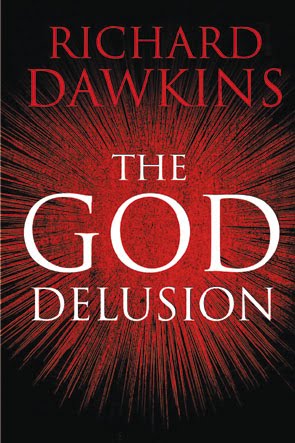
A few years ago, I asked for the book "The God Delusion" for Christmas. This is a book about atheism by the world's most famous atheist, Richard Dawkins. For the last few years, I've been looking into atheism. I've been reading books and articles, and listening to podcasts etc, trying to get a handle on it. I'm quite a critical thinker, and I don't like the idea that I've fallen into Christianity just because it's the religion of my childhood. At the same time, I wouldn't want to reject it for that reason either... I have been genuinely interested in what atheists have to say and I like to make sure that I haven't just been kidding myself that Christianity is a viable worldview option to own for my life.

I have to say that I've been a little disappointed with what I've found on offer by the "new atheists", and I'm quite fascinated by my level of disappointment. Megan, my life (typo - I meant my wife), laughs at me when I tell her how disappointed I am that the atheist's arguments haven't been able to sway me. I think she thinks there's something strange about that - not that the arguments haven't swayed me, but that I was so disappointed that they hadn't. My disappointment comes from three main things...

The first disappointment is that the level of argument against God hasn't been very sophisticated. I was genuinely hoping for more and hoping to be deeply challenged by the latest, cutting edge thinking in atheism - and it just wasn't there. Some of the arguments could have been refuted by Sunday School kids and others just demonstrated a complete lack of understanding of the nature of religion and spirituality in any form or expression across most of the world. I thought it might be just me, but then I heard two different people on two separate occasions on podcasts say that the arguments of the "new atheists" weren't as good as some of the great atheists of the past (and one of the people who said this was an atheist himself!)...

The second disappointment is the continual use of "straw man" arguments. "Straw man" arguments are when someone who disagrees with a point of view, weakly and erroneously builds up a picture of that point of view (the straw man), and then sets out to tear down the point of view bit by bit with apparent ease. Some of these guys are talking about strokes, hallucinations and being swept away by mega-church experiences as religion and then coming across like they've said and done something significant when they've talked down these things. It would be like bringing up the recent "Climategate" email scandal or CSIRO research scandal and then claiming that you've brought the field of science to its knees. It's kind of sad and funny at the same time...

But the third and biggest disappointment is the lack of an answer as to our origins or anything's origins for that matter. I was thinking that surely there would be some new insight into this or some new scientific discovery about this to back up this new zeal and fervor of the new atheists. I can appreciate a lot of the talk from atheists about how amazing evolutionary processes might be, but I've never heard any good response to the question of how the process began - which to my mind, undermines the whole credibility of the process as a useful theory. This seems like a pretty important piece of information to have a grasp of if you are going to be confident in your a-theism. But I was listening to Richard Dawkins talk at the Global Atheists Convention last month about evolution, and in this particular podcast his description of the origins of the universe and then of life was that there had been a does of "one shot mega luck"...

What? What did you say? One shot mega luck? - that's what you've replaced the notion of God with... You, what?... One shot mega luck? You must be kidding... This is what the world's most prominent atheist travels the world armed with as he confidently dismisses the existence of God. Sorry Richard, I was looking for more from you and the crew. I'm feeling a little more confident about where I'm at... but ever watchful. Truth can turn up in the most surprising of places.

Shalom...

Wednesday, February 3, 2010

God is Back (revisited)

In the middle of last year, I did a blog post called "God is Back" based on an article in The Australian about a book by the same name. The theme of the book is the surprising rise of faith, spirituality and religion across the world our journey into an apparently more rational and secular age.In 1999, The Economist published God's obituary, but 7 years later had to change their tune. "God is Back: How the Global Rise of Faith is Changing the World". is written by John Micklewait (editor-in-chief on The Economist) and Adrian Wooldridge (Washington bureau chief of the London-based weekly magazine) and looks at the reasons why spirituality and religion have persisted in the modern world when many predicted that it would die off in a puff of well-reasoned secularism.

I haven't got anything much more to say about that. This post is really to point you toward a very charming and amusing ABC Radio National podcast of an interview between John Micklewait and Phillip Adams, Australia's best-known atheist. The interview, originally broadcast in July last year) is about the book (the podcast is also called "God is Back"). Adams, with good grace, bemoans the book's findings and, with his tongue firmly in this cheek, confesses his growing dislike for the author. The exchanges between the two are quite delightful.

Anyway, I hope you enjoy it...

Shalom...

Wednesday, January 27, 2010

Art for God's Sake

A little while ago, I did a blog post on the Blake Art Prize (Australian Religious Art). I was talking about how some critics of the competition were saying that its definition of religion and spirituality were too vague, and were in danger of moving the art prize into meaninglessness, in terms of definitions of its core subject matter.

My lovely wife alerted me to this interesting podcast entitled, "Art for God's Sake" and it is all about this particular topic. You don't have to be interested in art to appreciate the insights from this podcast. A number of players are interviewed and a lot about Australian perceptions on religion and spirituality are revealed. Much of the discussion revolves around how we define spirituality and religion; what the differences might be; and how these definitions may have changed over time.

This is a worthwhile podcast - taste and see...

Shalom...

Tuesday, December 15, 2009

Religion Makes People Silly...

This is pretty funny, and should make you laugh a lot out loud. But then, if you really start to think about it, it is pretty sad, and it might make you cry a little bit...

Religion makes people silly... (my thought on one of the main points of Jesus' "Good Samaritan" story found in Luke 10:25-37)

Shalom

Thus Sayeth "The Science"

When did science become “the science”?

With the climate change debate going on at the moment, it seems that I read or hear the term “the science” not just every day, but many times per day. Sure, discussing climate change importantly involves discussing various scientific explorations and discoveries, but when did it become “the science”?


I think the idea behind “the science” is to give scientific exploration and discovery a new kind of status – dubious though it may be... In the pre-modern era, the people used to say, “thus sayeth the Lord”, but in the modern era (some would say “post-modern” era), apparently we are now supposed to say “thus sayeth the science”. There are a few problems with this...

The first thing, in relation to climate change science specifically, is that climate change science is not a “the” in the sense that it is not one science, but a combination of many different kinds of sciences (EG - biology, botany, meteorology, marine, environmental, pollution production science etc
...). Climate change science is a “young” science, in that it is an amalgamation of a number of scientific traditions and practices, still finding its way. Another problem with “the” in relation to science is that there is no common consensus on what the various studies on climate change is telling us. There is not a strong sense of “the” in how scientists interpret data on climate change, and in fact, scientists are being accused of being parts of factions or sides in the debate, rather than allowing their results to guide their thinking on the matter. This seems to be an area of great concern, given that the objectivity of science is supposed to be its prime strength. The recent “Climategate” scandal has provided some evidence that these camps exist and there is pressure on the scientific community to demonstrate results that prove one way or the other way, rather than to allow the data to speak for itself. It seems that scientists are human after all, like the rest of us, and that science is not the totally rational, values-free domain many had put their hope in.

I wonder if “the science” is really about science’s last gasp at credib
ility as we continue to move out of the modern era and into the post-modern era. The modern era was supposed to be about science, technology and rationalism saving the world from all of its sins and problems. Instead, what we have seen is new technology and science bringing with it, new problems and sins to deal with. It is the same old story, told in new ways...

Science is great and has contributed a lot of good to many in the world. But the real issues in the world – like climate change, global poverty, war, first world health and mental health, global financial crises etc – will not ultimately be solved by “the science”. These issues need an approach that considers the human condition, not just "the science" involved. The kind of good will that will solve these kinds of problems are found in the teachings of all the Bible and of Jesus – care for neighbours, care for strangers, care for "the least", generosity, hospitality, the common purse, the common good etc etc...

Maybe it is time to go back to “thus sayeth the Lord” and rediscover what it might mean in this post-modern time...?

Shalom...

Friday, October 16, 2009

Good News Week - Religion Awards

The folks from Good News Week are pretty well known for their low tolerance of religion in most of its forms. This week on their website, they've dedicated their 2009 awards section to religion and there are four candidates (from the Pope to an Islamic magazine) copping their ire here this week. Click here to take a look (then just scroll down a little bit)...

These guys think religion is silly and have picked a few good examples here to back up their case - as most people who don't like religion tend to do. For those of us who are spiritual and religious, we need to do our best not to give people so much ammunition to back up their case. We need to stop being silly because of our religion! Anyway...

I'm reminded that Jesus also thought that a lot of religion was silly or that any kind of religion could make you silly if you let it. When he told the story about the Good Samaritan (Luke 10:25-37), he cast the first two characters as religious people who, upon seeing a wounded man lying beaten, robbed and dying at the side of the road, walked on passed because they had important religious things to do. They missed what a lot of normal (meaning "not religious") people would not have missed - that this person was hurt and in danger, and in need of help. Religion can make people silly. It can make them not see what is obviously going on around them and miss out on doing something important that could really make a difference.

Richard Dawkins - the world's most famous atheist - has often quoted Nobel prize winning physicist Steven Weinberg, who said, "With or without [religion] you’d have good people doing good things and evil people doing evil things. But for good people to do evil things, it takes religion." This is a pretty stinging criticism of religion, but one that is not too difficult to find many cases that back it up.

We need to come back to what the Bible says about worthwhile religion; that, "Religion that God our Father accepts as pure and faultless is this: to look after orphans and widows in their distress and to keep oneself from being polluted by the world." (James 1:27). I think that this kind of religion is not only the kind that God would find "pure and faultless", but that others would find hard to fault and poke fun at as well. Let's make sure we keep "the main thing, the main thing" here.

Let's see people make fun of that...

Shalom...

Wednesday, October 7, 2009

A Message from God ???

The Weekend Australian ran an article on Saturday called "A Message from God". This title referred to the reflections of a Muslim man in the city of Padang on the island of Sumatra, where many have just died from an earthquake.

The man, Hajji, said, "We are being punished for not being devout enough." In his mind, the earthquake that killed so many people was God's will; that God made it happen to punish people for not being committed enough to him. It might sound a bit crazy to our modern, Western minds, but many cultures see deeper meanings in natural disasters and other natural phenomena, and these are often connected to the will of God or the gods.

We also shouldn't forget, that in our own Christian history and stories, there are precedents for God being behind natural disasters like the big flood (Genesis 6 - 9) and behind political disasters like the expansion of the Assyrian empire (Isaiah 7:18-25). We also read of God "hardening the heart of Pharaoh" (Exodus 6:6) so that this people could be freed from Egyptian slavery. The Christian scriptures put God in the place of rightful judge and the bringer of ultimate judgement. As as result of these actions, many people suffered and died.


Now, don't get me wrong. I don't actually think that God sent the earthquake to Sumatra to get the attention of the people there. It is probably my own modern mindset, but I still lean towards the idea that the earthquake was caused by the shifting of tectonic plates in what is well known to be a global earthquake "hotspot", and unfortunately, a whole lot of people live there and got in the way of this natural process. Tragic, but not perhaps, cosmic in scope...


What this article reminded me of though, was the idea of God as judge. It is not a popular idea and not one that I feel totally comfortable about even as I write this post. But the idea is clearly there in the Christian scriptures and if you're into the Christian scene, then it is an idea that is hard to ignore, if not impossible to ignore. Interestingly enough, in all the Biblical cases of judgement that I mentioned before, God gives a long lead-in time of warning, and many opportunites to avoid what might be to come. Noah preaches for decades, the prophets come to the Jewish people to call them to repentance, and even Pharaoh and the Egyptians get Moses and Aaaron warning them on number of occasions of what they could do differently to avoid the coming judgement.

These poor people in Sumatra didn't get these kinds of warnings from God prior to the earthquake. I think we can safely say that, as God's M.O.(police jargon for "mode of operation") was not used, that these people were not being judged by God.


The Bible talks about God as judge, but also as the one who is slow to anger and judge; the one who loves to forgive; the one who warns and shows the way back to right living; and the one who ultimately sacrifices himself and takes the judgement on himself for anyone who wants to commit themselves to him and to the good life he wants for all people. In some ways, I'm glad that there is a judge, and that judgement of the world is in God's hands. As I look around and see some of terrible things that go on, I really want to know that at some stage, justice will really be done, by someone who really knows what they're doing.

Shalom...

U2: Faith in the Ear of the Hearer

Here is an article that appeared on the www.@U2.com website. I love this band - not only are they the best and most innovative rock band in the world, but they are chock full of substance. An incredible and rare mix in the rock 'n roll world and in the world in general, if you ask me...

Thanks to Francis for passing this article on to me.

Shalom...

Monday, September 28, 2009

Marketing or Mission ???

The Weekend Australian ran an article on Saturday called, "Churches Unite to Promote Jesus". The article is about the $1.5 million "Jesus - all about life" marketing campaign that is being run in NSW by The Bible Society of NSW. The aim of the campaign is to highlight that Jesus has the answers to even the most complex questions of modern life.


Can Jesus be marketed? Should he be? Hasn't he always been? - some would ask...

I've always thought that Jesus needed to be "mission-ed" (I don't actually think that this is a word)... By that, I mean that I always thought that Jesus needed to be shared with others and understood through caring relationships; through sharing life with others; and through acts of kindness and compassion. When God wanted to do his most important work for the world, he became one of us and moved into the neighbouthood to make a lasting difference. For me, Jesus is not information to be shared, but a relationship with God and an agenda for life to be engaged in. Can a marketing campaing be consistent with this?

It could easily be argued that an important part of the process of understanding and getting to know Jesus is about information. How do I go about understanding who Jesus is and what he is on about? I guess I need some information to know whether I should even bother trying... The aim of this campaign seems to be to get people talking about Jesus at work, at school, with friends etc...

There was an interesting interview on ABC Life Matters with David Willis (Bible Society - NSW) a
nd Sharon Williams (Taurus Marketing) about the campaign they have put together and their thoughts on these kinds of questions. This is followed by another interesting interview on "Christot-ainment" which is worth listening on to.

Maybe there is a place for this kind of marketing alongside mission. Part of the history of the Christian faith has been "proclaiming the word" to others. This might just be one of the ways that this is done in the 21st century. Maybe its okay, as long as it doesn't replace real Jesus-like engagement with the world around us.

What do you think?

Shalom...

Wednesday, September 23, 2009

Jesus Asked...

When I go home from work on the train, I get a free "newspaper" (and I use the term loosely) called MX. In it, the other day, was an article called, "It's Surreal, But That Makes Sense". It "borrowed" this story from an article in "The Daily Telegraph" from the UK.

The story is about an American researcher, Travis Proulx, who has made an interesting observation through his research, that people actually learn better if they are presented with less straight forward, more surreal learning experiences, rather than clear, well organised information and facts. While this seems to fly in the face of common sense, it is not really a new discovery. In fact, Jesus, who is widely regarded as one the greatest teachers of all time, used this learning technique more than any other.

I have already highlighted this to a certain extent in a previous post, "Jesus is the Question". More than preaching sermons or arguing apologetics, Jesus actually told riddles and parables; asked people probing and personal questions; and rarely gave a straight answer to questions that were asked of him. On the surface, not much a teacher, but this latest research might suggest otherwise...

People often think that the reason Jesus told parables was to make the things of God clearer to his listeners. But when asked about why he told parables, he replied that the parables would only give insight to those who are seeking out the truth of God in their lives. For Jesus, this was the key to getting anything at all out of his difficult and surreal teaching methods. These people would listen to his parables and then ponder on them and reflect on what they might mean for them. It was through this kind of prayerful searching, that they would unlock the mysteries behind these strange, often obtuse stories (Matthew 13:1-17).


What do the stories of Jesus do for you?

Before I go, I want to re-recommend, the "Jesus Asked" podcast series that I previously recommended in my "Jesus is the Question" post. You can either download the podcasts directly or subscribe to them via i-tunes.

Do it now !!!

Shalom...
 
You will need to update the "xxxx-x" in the sample above with your own Google Analytics account number. Note that the following line of code must be placed on the page before any reference to the pageTracker object. var pageTracker = _gat._getTracker("xxxx-x");