Saturday, November 13, 2010
Challenging the Chaplains
Monday, July 5, 2010
Gillard Won't Play the Religion Card
It certainly won't be last time we hear of this, in fact, what I think will happen, is that something that has been puttering along in the background of Australian politics is going to come more to the forefront. Australian Christian lobby and interest groups are going to have to re-adjust to new religious/political landscape after 14 or 15 years with a religious person in charge of the country.I'm guessing that Julia Gillard won't have the same connection and empathy with certain religious agendas and religious groups might find themselves looking for new ways to get the government's ear...
Thursday, April 22, 2010
"God and Caesar"
(For those of you on Facebook, this “note” is a blog post on my blog called “Steve’s Greenspace” – about the relationship between personal and public spirituality. The posts come across to Facebook as notes and all my “friends” get them inflicted upon them. If you don’t want to receive them, please feel free to not read them, but please still be my friend... Steve)
Angela Shanahan wrote an interesting article in The Weekend Australian a number of weeks ago called “Godless politics has gone too far for democracy”. It is worth reading... In the article, she recounts a question asked by an audience member on the ABC’s “Q & A” panel show. A young man asked the panel whether people with strong religious beliefs should be allowed to participate in politics.
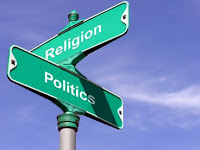
The philosophy or attitude behind this question is one that is on the rise in Australia at present. I wonder if it coincides with the rise of a more overt and activist atheist movement in the country – not sure, but maybe... Anyway, the philosophy is one about the meaning of secularism and how it relates to democracy. The philosophy promotes an understanding of secularism which means “no religion” in the public sphere, rather than “all religions” in the public sphere (and not just all religions, but all worldviews and voices). It comes out of a misunderstanding of the meaning of “the separation of church and state” and of a New Testament phrase - “Give Caesar what is Caesar’s, but give God what is God’s” (Matthew 22:15-22).
Angela Shanahan takes a look at these ideas as part of her article as well. The misunderstanding of the “God and Caesar” idea promotes the idea that religion is one thing, politics is another thing, and the two shouldn’t mix. When church leaders enter into political debates, politicians are likely to politely respect their opinions but kindly invite them to go back to what it is that they are good at (IE – not politics). When Jesus said, “Give to Caesar what is Caesar’s, but give to God what is God’s”, he had no intention of encouraging people to leave their spiritual lives at the door of the public arena. He was simply giving a clever answer to a question that had been designed to trap him into an answer that would cause him trouble.
The Jews were a conquered people, struggling under Roman rule, and Religious leaders came up with a question that was sure to get Jesus into trouble with his hearers – “Should we pay tax to Caesar?” If Jesus answered “yes” then he was supporting the people’s oppressors; if he answered “no” then he would be encouraging dissent or even rebellion. So, Jesus (who doesn’t feel the need to fall into people’s traps for him) says, “Give me a coin. Whose face is on it?” The answer was “Caesar’s”. Well then, “Give to Caesar what is Caesar’s, but give to God what is God’s.” Jesus is not much of a game player and he doesn’t give a lot of airplay to the game players. The question wasn’t a serious one, so rather than engage with it, he turns (as he often does) the potential trap into an opportunity to promote his own hobby horse – “give your life over to God”.
This is a technique I’ve seen many politicians use. ("Well Kerry, that is a good question, but what the people of Australia really want to know is...” ). Maybe Jesus should have gone into politics... But I digress. Jesus’ message to people, over and over, was “take God seriously in your life, or don’t, but whatever you do don’t flounce around in-between.” And this was his message for all of life – not just what some regard as the “spiritual” parts. It even applies to the world of politics...
Shalom...
Friday, March 19, 2010
Blowing the Cobwebs off this Blog...
It has been ages since I've made a post on this blog and there have been many blog-able things going on. I've been a little busy with work and life, and the blog is the thing that suffers when that is the case. I just don't have, what my wife calls, "the mental real estate" to think and write about stuff when too much is happening on everywhere else in my life... Today, I just wanted to let people know that there is a great article in today's Australian called "Looking for the Real Abbott". It is about Tony Abbott's "Conservatism" and "Catholicism" (again) and how the media has been dealing with it. This article kind of builds on from my previous post (back in the dark annuls of history that it is)...
Paul Kelly (editor-at-large - what a great job title) says that the media are doing Tony Abbott a dis-service by presenting his faith in a particular way that matches a religious "narrative" about him that makes good viewing or reading, but does not present the factual story or a well-rounded picture. He puts up as an example, the ABC's Four Corner interview with Tony Abbott called "The Authentic Mr Abbott" from last Monday night, saying that Liz Jackson goes out of her way to encourage the "Mad Monk" narrative, focusing on anything negative that can be connected to his faith.Also in the article, Kelly goes on to talk about the different approach that Kevin Rudd takes to dealing with his faith in public and asks whether the faith of our two leading politicians will become an election issue. While he says it "currently lurks in the background", I think it might be more prominent than that. The targets are seemingly too huge to resist... So, we shall see what develops... (anyway, the article is a good read)...
Shalom...
Wednesday, February 3, 2010
God is Back (revisited)
In the middle of last year, I did a blog post called "God is Back" based on an article in The Australian about a book by the same name. The theme of the book is the surprising rise of faith, spirituality and religion across the world our journey into an apparently more rational and secular age.In 1999, The Economist published God's obituary, but 7 years later had to change their tune. "God is Back: How the Global Rise of Faith is Changing the World". is written by John Micklewait (editor-in-chief on The Economist) and Adrian Wooldridge (Washington bureau chief of the London-based weekly magazine) and looks at the reasons why spirituality and religion have persisted in the modern world when many predicted that it would die off in a puff of well-reasoned secularism.
I haven't got anything much more to say about that. This post is really to point you toward a very charming and amusing ABC Radio National podcast of an interview between John Micklewait and Phillip Adams, Australia's best-known atheist. The interview, originally broadcast in July last year) is about the book (the podcast is also called "God is Back"). Adams, with good grace, bemoans the book's findings and, with his tongue firmly in this cheek, confesses his growing dislike for the author. The exchanges between the two are quite delightful.Anyway, I hope you enjoy it...
Shalom...
Wednesday, January 27, 2010
Art for God's Sake
My lovely wife alerted me to this interesting podcast entitled, "Art for God's Sake" and it is all about this particular topic. You don't have to be interested in art to appreciate the insights from this podcast. A number of players are interviewed and a lot about Australian perceptions on religion and spirituality are revealed. Much of the discussion revolves around how we define spirituality and religion; what the differences might be; and how these definitions may have changed over time.This is a worthwhile podcast - taste and see...
Shalom...
Monday, September 28, 2009
Marketing or Mission ???
Can Jesus be marketed? Should he be? Hasn't he always been? - some would ask...
I've always thought that Jesus needed to be "mission-ed" (I don't actually think that this is a word)... By that, I mean that I always thought that Jesus needed to be shared with others and understood through caring relationships; through sharing life with others; and through acts of kindness and compassion. When God wanted to do his most important work for the world, he became one of us and moved into the neighbouthood to make a lasting difference. For me, Jesus is not information to be shared, but a relationship with God and an agenda for life to be engaged in. Can a marketing campaing be consistent with this?
It could easily be argued that an important part of the process of understanding and getting to know Jesus is about information. How do I go about understanding who Jesus is and what he is on about? I guess I need some information to know whether I should even bother trying... The aim of this campaign seems to be to get people talking about Jesus at work, at school, with friends etc...
There was an interesting interview on ABC Life Matters with David Willis (Bible Society - NSW) and Sharon Williams (Taurus Marketing) about the campaign they have put together and their thoughts on these kinds of questions. This is followed by another interesting interview on "Christot-ainment" which is worth listening on to.
Maybe there is a place for this kind of marketing alongside mission. Part of the history of the Christian faith has been "proclaiming the word" to others. This might just be one of the ways that this is done in the 21st century. Maybe its okay, as long as it doesn't replace real Jesus-like engagement with the world around us.
Thursday, September 10, 2009
An Aussie Bill of Rights & Freedom of Religion
You may or may not know that there has been a national consultation going on about how to best protect Human Rights in Australia. Some of this discussion has been around whether Australia needs a Bill or Charter of Rights like many other Western countries have, although a number of other processes have been suggested and are up for discussion.If you're interested in finding out a little more about the process, click here to go to the consultation website, and / or click here to listen to a podcast about the current progress on the consultation.
But all that is just the entree. The main course for this blog post is yet another podcast I listened to the other day. It was from the ABC's "Life Matters" program, and it was very interesting. It had a number of people from different religious groups in Australia, talking together on a panel about how a Bill of Rights might effect freedom of religion in Australia.
To listen to this one, click here ...
Shalom...
Thursday, July 16, 2009
Happy 500th Birthday John...
Love him or hate him, Calvin was an amazingly influential figure. Such was his influence, that a whole branch of Christian theology called "Calvinism" was developed, based on his teachings. The most well-know tenets of Calvinism are probably the amazing grace of God and the election or pre-destination of Christians. There is even a theological approach to life called "Hyper-Calvinism" (and I include that piece of information here soley because I love the name). Some say that Calvin's ideas even contributed to the development of capitalism and democracy in the West. He wrote heaps on his ideas in various letters, treaties and commentaries and preached many, many sermons - most which are still available for us today.Why am I bringing John Calvin to your attention? Mainly because he was one of most significant religious people in modern history and his life is currently being remembered across the planet because of his quincentenary. I think that its good to know a bit about these things if you're interested in the kind of private/public spirituality issues that this blog goes on about. Also, if you're a Protestant, then you are probably influenced in some way by Calvin and Calvinism, but you might not have ever known that. I think its good from time to time to look at this thing called Christianity that some of us are trying to live out and ask how much of it is "pure" Christianity (if we can ever discover such a thing), and how much of it is Christianity based on a particular theological, geographical, denominational influence. These kind of questions help us to keep our own truth claims in check , to keep ourselves humble, and to allow ourselves to be open to the views of others.
For more information on John Calvin, you could simply google his name and go for your life, or have a look at some of these sites:
- Wikipedia - John Calvin
- History Learning Site
- New Advent - Catholic Encyclopedia
- The Australian - Decline of John Calvin
I listened to an interesting podcast about John Calvin on the ABC Radio National program, "The Spirit of Things". Host, Rachael Kohn, interviewed Randall Zachman (a "Calvin Scholar" - who knew you could be such a thing?) about the life, teachings and influences of John Calvin. It is worth a listen if you're into such things.Anyway, "Happy Birthday John Calvin" and I hope the rest of you have a nice day too...
Shalom...
Monday, June 15, 2009
Tim Costello on the ABC's Talking Heads Show
Sunday, May 24, 2009
Father Kennedy - Beliefs vs Practice
I (and many others) have been following the drama surrounding Father Peter Kennedy and St Mary's Catholic Church over the past few months (and quite frankly, I've been wondering when I was going to get around to writing something about it on this blog)...The Weekend Australian ran an article on Saturday, the 23rd May, called "The father, the shun and the holey spirit". It touched on some of the content of an interview that had taken place between the ABC's Steve Austin and Father Kennedy on the 11th of May. It is a great interview - very interesting. Steve Austin does a wonderful job here, trying to get to the heart of Peter Kennedy, the man repeatedly dubbed in the media as "the rebel priest". And Father Kennedy himself comes across as a very likeable character - the kind of person you'd love to have over for dinner for a big chat about life, the universe and everything.
Tess Livingstone's article touched upon issues that friends of mine and I have been talking about in relation to these dramas, but have not been given that much attention to this point. Bit by bit, the "theology" of Father Kennedy has come out, but now that he has been removed from his church role, he seems a lot freer to talk about such things. It seems that he doesn't really believe in a number of things that many Christians would argue are core beliefs of the Christian faith - EG that Jesus actually existed, or if he did, that he died and rose again... These would have to be two of the central beliefs of the Christian faith which at its core, requires a person to follow Jesus (who must exist to be followed) and to put their hope in the resurrection (the act on which all the hope of Christians rests). The Apostle Paul says, in 1 Corinthians 15, that if Jesus hasn't been resurrected, then the Christian faith is a joke. Even Steve Austin, who doesn't identify himself as Catholic, finds it hard to understand, that a Catholic priest might not believe in these core tenets of faith and still want to call himself Christian.
So, it is interesting that Father Kennedy on one hand, cites the example of Jesus as a rebel and a rule breaker, persecuted by the church for his unorthodox beliefs and practices (this image, of course, justifies his own situation and treatment); but then on the other hand, doubts the very existence of the person of his example. Instead, he seems to put more faith in less concrete cosmic themes like the rhythms of nature and the mysteries of life. Now, don't get me wrong, I have an appreciation of these themes and their important role in revelations of spiritual truths, but I don't see them shaping up as a replacement for what Jesus' existence and resurrection can tell us about who God is, what God is about and how we should then live. There is no doubt that Father Kennedy does not share the rthodox beliefs tof the mainstream Christian church.
But then there are the practices of Father Kennedy and the St Mary's congregation... The community of St Mary's is one where the poor and marginalised are welcome and the commitment to social justice is high. People who wouldn't go to other churches, go and are welcome, there. Issues that are not on the agenda of most churches, and should be, are given attention and resources there. And these are practices I woul argue are essential to the DNA of fair dinkum churches. So, in all this, my big question has been - what is more important? Right belief (orthodoxy) or right practice (orthopraxy)? Because many, many churches who have the so called "right" beliefs, do not commit to these right practices, yet there have been many criticisms about Father Kennedy and St Mary's for having "wrong" beliefs, while engaging in what are essentially right Christian practices.
I wonder which is the worse problem to have...
In the Bible, Jesus said that there are those who are going to call to him saying, "Lord, Lord", and he isn't going to know who they are. He told a story about the end time judgement, officated by Jesus, that tells us that the criteria for salvation is what people DID or DID NOT DO for "the least". And in another parable of Jesus, one son was considered to be "good" by the father, for DOING what his father wanted him to do, even after he said he wasn't going to; and the bad son was the one who said he would do it, but then DIDN'T do it. I don't know, but as go through the Bible, there is a pretty good case that can be mounted for the importance of doing the right thing in God's eyes, and that this is of more importance than we give it credit for in God's scheme of things. There are things we could say about Father Kennedy's "orthodoxy", but could criticisms of equal weight be leveled at many, many Christian churches, for their lack of "orthopraxy"? And why hasn't this counter-criticism been a more prominent part of the media comment and debate?So finally, my big question for today really is, "What is the point of having all the right beliefs, if they don't lead to the right practices?"
Shalom!
Thursday, March 19, 2009
ABC Q&A - Religion, Sex and Politics
Topics covered are alcohol use and young people, the St Mary's Catholic church situation (Father Kennedy is one of the guests), the church and sexuality and the Obama administration. I won't comment any further, I'll just bring the show and the episode to your attention. If anyone wants to chat about it, then feel free to add a comment to this post.
Shalom...


