Thursday, April 22, 2010

"One Shot Mega-Luck"...?

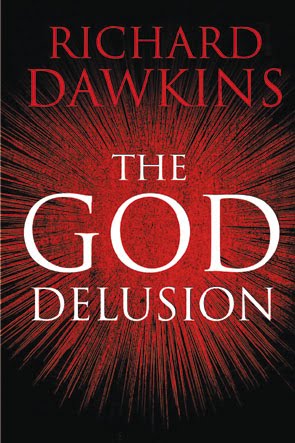
A few years ago, I asked for the book "The God Delusion" for Christmas. This is a book about atheism by the world's most famous atheist, Richard Dawkins. For the last few years, I've been looking into atheism. I've been reading books and articles, and listening to podcasts etc, trying to get a handle on it. I'm quite a critical thinker, and I don't like the idea that I've fallen into Christianity just because it's the religion of my childhood. At the same time, I wouldn't want to reject it for that reason either... I have been genuinely interested in what atheists have to say and I like to make sure that I haven't just been kidding myself that Christianity is a viable worldview option to own for my life.

I have to say that I've been a little disappointed with what I've found on offer by the "new atheists", and I'm quite fascinated by my level of disappointment. Megan, my life (typo - I meant my wife), laughs at me when I tell her how disappointed I am that the atheist's arguments haven't been able to sway me. I think she thinks there's something strange about that - not that the arguments haven't swayed me, but that I was so disappointed that they hadn't. My disappointment comes from three main things...

The first disappointment is that the level of argument against God hasn't been very sophisticated. I was genuinely hoping for more and hoping to be deeply challenged by the latest, cutting edge thinking in atheism - and it just wasn't there. Some of the arguments could have been refuted by Sunday School kids and others just demonstrated a complete lack of understanding of the nature of religion and spirituality in any form or expression across most of the world. I thought it might be just me, but then I heard two different people on two separate occasions on podcasts say that the arguments of the "new atheists" weren't as good as some of the great atheists of the past (and one of the people who said this was an atheist himself!)...

The second disappointment is the continual use of "straw man" arguments. "Straw man" arguments are when someone who disagrees with a point of view, weakly and erroneously builds up a picture of that point of view (the straw man), and then sets out to tear down the point of view bit by bit with apparent ease. Some of these guys are talking about strokes, hallucinations and being swept away by mega-church experiences as religion and then coming across like they've said and done something significant when they've talked down these things. It would be like bringing up the recent "Climategate" email scandal or CSIRO research scandal and then claiming that you've brought the field of science to its knees. It's kind of sad and funny at the same time...

But the third and biggest disappointment is the lack of an answer as to our origins or anything's origins for that matter. I was thinking that surely there would be some new insight into this or some new scientific discovery about this to back up this new zeal and fervor of the new atheists. I can appreciate a lot of the talk from atheists about how amazing evolutionary processes might be, but I've never heard any good response to the question of how the process began - which to my mind, undermines the whole credibility of the process as a useful theory. This seems like a pretty important piece of information to have a grasp of if you are going to be confident in your a-theism. But I was listening to Richard Dawkins talk at the Global Atheists Convention last month about evolution, and in this particular podcast his description of the origins of the universe and then of life was that there had been a does of "one shot mega luck"...

What? What did you say? One shot mega luck? - that's what you've replaced the notion of God with... You, what?... One shot mega luck? You must be kidding... This is what the world's most prominent atheist travels the world armed with as he confidently dismisses the existence of God. Sorry Richard, I was looking for more from you and the crew. I'm feeling a little more confident about where I'm at... but ever watchful. Truth can turn up in the most surprising of places.

Shalom...

"God and Caesar"

(For those of you on Facebook, this “note” is a blog post on my blog called “Steve’s Greenspace” – about the relationship between personal and public spirituality. The posts come across to Facebook as notes and all my “friends” get them inflicted upon them. If you don’t want to receive them, please feel free to not read them, but please still be my friend... Steve)

Angela Shanahan wrote an interesting article in The Weekend Australian a number of weeks ago called “Godless politics has gone too far for democracy”. It is worth reading... In the article, she recounts a question asked by an audience member on the ABC’s “Q & A” panel show. A young man asked the panel whether people with strong religious beliefs should be allowed to participate in politics.

The philosophy or attitude behind this question is one that is on the rise in Australia at present. I wonder if it coincides with the rise of a more overt and activist atheist movement in the country – not sure, but maybe... Anyway, the philosophy is one about the meaning of secularism and how it relates to democracy. The philosophy promotes an understanding of secularism which means “no religion” in the public sphere, rather than “all religions” in the public sphere (and not just all religions, but all worldviews and voices). It comes out of a misunderstanding of the meaning of “the separation of church and state” and of a New Testament phrase - “Give Caesar what is Caesar’s, but give God what is God’s” (Matthew 22:15-22).

Angela Shanahan takes a look at these ideas as part of her article as well. The misunderstanding of the “God and Caesar” idea promotes the idea that religion is one thing, politics is another thing, and the two shouldn’t mix. When church leaders enter into political debates, politicians are likely to politely respect their opinions but kindly invite them to go back to what it is that they are good at (IE – not politics). When Jesus said, “Give to Caesar what is Caesar’s, but give to God what is God’s”, he had no intention of encouraging people to leave their spiritual lives at the door of the public arena. He was simply giving a clever answer to a question that had been designed to trap him into an answer that would cause him trouble.

The Jews were a conquered people, struggling under Roman rule, and Religious leaders came up with a question that was sure to get Jesus into trouble with his hearers – “Should we pay tax to Caesar?” If Jesus answered “yes” then he was supporting the people’s oppressors; if he answered “no” then he would be encouraging dissent or even rebellion. So, Jesus (who doesn’t feel the need to fall into people’s traps for him) says, “Give me a coin. Whose face is on it?” The answer was “Caesar’s”. Well then, “Give to Caesar what is Caesar’s, but give to God what is God’s.” Jesus is not much of a game player and he doesn’t give a lot of airplay to the game players. The question wasn’t a serious one, so rather than engage with it, he turns (as he often does) the potential trap into an opportunity to promote his own hobby horse – “give your life over to God”.

This is a technique I’ve seen many politicians use. ("Well Kerry, that is a good question, but what the people of Australia really want to know is...” ). Maybe Jesus should have gone into politics... But I digress. Jesus’ message to people, over and over, was “take God seriously in your life, or don’t, but whatever you do don’t flounce around in-between.” And this was his message for all of life – not just what some regard as the “spiritual” parts. It even applies to the world of politics...

Shalom...

Saturday, March 20, 2010

Monty Python and The Life of Brian

"The Life of Brian"... I love this movie. I used to use segments of it when I taught RE is schools. I had it worked out perfectly so as to miss all the bits with swearing in it. Except for that one day, when I was standing at the back of the classroom, day dreaming a little, without the video remote control in my hand, and Brian tells everyone who is trying to follow him to "Fuck Off!!!" I hastily made a deal with the students that involved them going out from class a little early in return for not telling anyone that there had been swearing on the TV in the chaplain's RE lesson.

But I digress...

A few weeks ago, we were watching "Monty Python's - Almost the Truth: the lawyer's cut" on the TV and there was a great segment on the time John Cleese and Michael Palin had a TV debate with The Bishop of Surrey (I think) and Malcolm Muggeridge about the whether the film degraded Jesus or not. I couldn't find that particular segment online but I did find another Youtube video on it, and it is worth a look:


I love it... I'm totally on the side of the Python crew... I love the conclusion that they come to that they can't find enough in the teachings and life of Jesus to ridicule him. What they did come up with in the end was pure gold. It's hard to imagine the movie being anything else other than what it is...

Shalom...

Friday, March 19, 2010

Blowing the Cobwebs off this Blog...

It has been ages since I've made a post on this blog and there have been many blog-able things going on. I've been a little busy with work and life, and the blog is the thing that suffers when that is the case. I just don't have, what my wife calls, "the mental real estate" to think and write about stuff when too much is happening on everywhere else in my life... Today, I just wanted to let people know that there is a great article in today's Australian called "Looking for the Real Abbott". It is about Tony Abbott's "Conservatism" and "Catholicism" (again) and how the media has been dealing with it. This article kind of builds on from my previous post (back in the dark annuls of history that it is)...

Paul Kelly (editor-at-large - what a great job title) says that the media are doing Tony Abbott a dis-service by presenting his faith in a particular way that matches a religious "narrative" about him that makes good viewing or reading, but does not present the factual story or a well-rounded picture. He puts up as an example, the ABC's Four Corner interview with Tony Abbott called "The Authentic Mr Abbott" from last Monday night, saying that Liz Jackson goes out of her way to encourage the "Mad Monk" narrative, focusing on anything negative that can be connected to his faith.

Also in the article, Kelly goes on to talk about the different approach that Kevin Rud
d takes to dealing with his faith in public and asks whether the faith of our two leading politicians will become an election issue. While he says it "currently lurks in the background", I think it might be more prominent than that. The targets are seemingly too huge to resist... So, we shall see what develops... (anyway, the article is a good read)...

Shalom...

Wednesday, February 3, 2010

God is Back (revisited)

In the middle of last year, I did a blog post called "God is Back" based on an article in The Australian about a book by the same name. The theme of the book is the surprising rise of faith, spirituality and religion across the world our journey into an apparently more rational and secular age.In 1999, The Economist published God's obituary, but 7 years later had to change their tune. "God is Back: How the Global Rise of Faith is Changing the World". is written by John Micklewait (editor-in-chief on The Economist) and Adrian Wooldridge (Washington bureau chief of the London-based weekly magazine) and looks at the reasons why spirituality and religion have persisted in the modern world when many predicted that it would die off in a puff of well-reasoned secularism.

I haven't got anything much more to say about that. This post is really to point you toward a very charming and amusing ABC Radio National podcast of an interview between John Micklewait and Phillip Adams, Australia's best-known atheist. The interview, originally broadcast in July last year) is about the book (the podcast is also called "God is Back"). Adams, with good grace, bemoans the book's findings and, with his tongue firmly in this cheek, confesses his growing dislike for the author. The exchanges between the two are quite delightful.

Anyway, I hope you enjoy it...

Shalom...

Wednesday, January 27, 2010

Tony Abbott Talks About Sex...

Tony Abbott wants his 3 daughters to preserve their virginity until they are married. Well, this is what he said in an interview with the "Women's Weekly" magazine, and the storm is brewing nicely in the tea cup. Some are in uproar, saying that Abbott should keep his opinions on women's sexuality to himself, and that his comments are just another example of his Catholic conservatism being inappropriately expressed in the public and political realm. Others are wondering what the fuss is all about. "What else would Tony Abbott want for his daughters?" they ask, challenging politicians from all parties and religious backgrounds to come clean on their own views, (which they assume are the same as or similar to his). This might free him up from the specific criticisms that are being leveled at him - but probably not...

I wonder had a non-religious politician had expressed the same views, would they have received the same criticisms or attention? (of course, it helps that he is the Opposition Leader)... But everyone knows that Tony Abbot is "religious" and "conservative" - he has these labels reapplied in the newspapers every time he opens his mouth. His view on virginity would be a common view expressed by religious people of many persuasions. The hope he expressed for his daughters would be a hope shared with many parent - both religious and non-religious. As an editorial in The Australian pointed out, "You don't have to be a Christian to believe that sex before marriage is wrong..." (but if you are a Christian, or religious, and you believe this, and God forbid, express it, then you'd better watch out)...

One of the comments in The Australian today was interesting. In Lauren Wilson's article, "Making a Gift of Yourself", she refers to Julia Gillard's response to Abbott's comments. She writes, "Gillard declared Mr Abbott had 'confirmed the worst fears' about his conservative social views, virginity became shorthand for questioning his fitness to rule a liberal secular Australia."

So, does having Christian views on personal behaviour exclude you from being able to carry out a political role in Australia? Can you have Christian views, but not express them? Is that okay? Can you have personal views on an issue, express them, but not push them in your political role? Is any of this possible and/or permissable?

We have two political leaders who have clearly and plainly identified themselves as Christian people. We'd better hope that it's okay for our leaders to be Christians and to be politicians or even Prime Ministers, because that is the choice we face in the election coming up later this year.

I wonder what Kevin Rudd thinks about the virginity of his daughter, or do I...? Rudd might be a bit smarter than Abbott, and he might keep this opinion to himself so as to avoid the criticism. It is a shame that he might feel he has to. Lucky for him that he had a Julia Gillard on his team. She was probably more than happy to respond on his behalf... :)

Shalom...


Art for God's Sake

A little while ago, I did a blog post on the Blake Art Prize (Australian Religious Art). I was talking about how some critics of the competition were saying that its definition of religion and spirituality were too vague, and were in danger of moving the art prize into meaninglessness, in terms of definitions of its core subject matter.

My lovely wife alerted me to this interesting podcast entitled, "Art for God's Sake" and it is all about this particular topic. You don't have to be interested in art to appreciate the insights from this podcast. A number of players are interviewed and a lot about Australian perceptions on religion and spirituality are revealed. Much of the discussion revolves around how we define spirituality and religion; what the differences might be; and how these definitions may have changed over time.

This is a worthwhile podcast - taste and see...

Shalom...

Sunday, January 10, 2010

This made me laugh...


Sunday, January 3, 2010

Whatever Happened to Secular Democracy ?

On the 28th of December, Ross Fitzgerald wrote an article in The Australian called "Whatever Happened to Secular Democracy?" In it, he complains about how religion is making its presence felt more and more in Australian politics. Although it is not really clear what solution he is proposing, he seems to be putting forward that either Christians shouldn't be in politics; that Christians shouldn't try to influence politics; or that Christians should slice off the Christian part of themselves when in politics.

It is all very interesting... And it seems that many people thought so as well. There were about 180 comments attached to the online version of the article and space given to 6 related letters to editors in The Weekend Australian.

Just a few thoughts...

Firstly, it seems to me that Ross (and others) doesn't really understand what a "secular democracy" is or what is meant by "the separation of church and state". Neither concepts are designed to keep religion out of politics, but to ensure that no one religion is owned by the state or that the state is owned by one religion for that matter... If people elect Christians into various political offices, then that is democracy in action. If Christians lobby for what they want to see happen in politics, then that is democracy in action. If Christians in politics act Christianly (or otherwise) in the performance of their duties, then that is democracy in act
ion. If people don't like any of that, then they can also engage in the democratic process and get their agendas on the table and try to make whatever it is they want to have happen, happen. They can also elect representatives who aren't religious if they want to. This happens all the time. So, "secular democracy" means that religion has a place in public life, whether people like ior believe in a religion or not. To actually exclude religion from public life would be undemocratic and not in the spirit of secularism.

Secondly, everyone has some kind of worldview, schema, philosophy of life etc etc that they live by - some are "religious" and some are "secular". These are the values that guide people's actions - even politicians! To ask a person to engage in politics and slice off their source of values as they do so, is crazy talk... No-one would ask this of a non-religious person. I think the challenge for Christian politics is to engage in democratic processes in a Christian way, that doesn't just promote the wellbeing of Christians, but of all the people they were elected to represent.

Thirdly, religion is political. People who go on about keeping religion personal and out of public life do not understand the scope of the spiritual agendas of most religions. "Personal salvation" and "personal faith" are only parts of the story. Both Old and New Testaments talk about economics, politics, citizenship, war, peace, refugees, the poor, the environment etc... The Jewish concept of "Shalom" is about cosmic renewal, and God's interest in all areas of life.

I think that the concept of "Shalom" is a useful one for Christians in politics.
Understanding these things, we can see a place for religion and spirituality in public life.

Shalom...

Friday, January 1, 2010

Happy New Year !!!

It's that funny, "in-between" time of the year... The Dec/Jan period is a weird time, unlike any other time of the year. It's a bit like break up day, but for about a month. People are away, work slows down, shops close, you take holidays etc etc - it's a funny, "in-between" time of year.

Christmas has come and gone (thank God). I survived the silliness of the season by focusing on "advent", which means "coming" or "arrival". It involved reflecting on the coming of Jesus for the month prior to Christmas Day. I, and others, reflected on daily personal advent readings and on weekly group-based candle lighting ceremonies and reflections during this time. We all found this a helpful way to keep focused on something deep and meaningful, at a time when we could be forgiven for thinking that the meaning of life was shopping, eating, and wearing funny hats. It was a great reminder for me that God is engaged with us, even though things don't seem to be going too smoothly in much of the world. Maybe there is some hope to work in with and to work toward...

The New Year has also arrived. They just seem to keep on coming (we were in bed by 10pm on NYE - woohoo!!!)... There has been a lot of reflecting in the media on not just the year, but the whole "noughties" decade. Time magazine called the last decade, "the decade from hell". The new millennium held a lot of hope, but that hope quickly faded with wars, terrorism, climate change and global financial concerns. It seems that as time marches on, we get smarter and more advanced, but things don't necessarily get better.

It might actually be true that we need some help in this life, and maybe even someone to save us - particularly as we get smarter, but not wiser. Our advancements just seem to bring new sets of problems with them, rather than the solutions we had hoped for. I hope that your "in-between" time was not too silly, and that you got the chance to reflect on something deep and meaningful along the way. If you didn't, it's not too late. Work starts on Monday, so that still leaves two days for getting even a little deep and meaningful. You'd better get going...

Shalom...
 
You will need to update the "xxxx-x" in the sample above with your own Google Analytics account number. Note that the following line of code must be placed on the page before any reference to the pageTracker object. var pageTracker = _gat._getTracker("xxxx-x");